Drew Bauer · 9 October 2026
Unexpected Applications of Marblepiston Technology Across Modern Design Disciplines
Marblepiston technology combines marble composites with precision piston mechanisms to deliver low-friction movement and exceptional durability in compact forms, and designers have started incorporating these systems into fields far removed from traditional industrial machinery. Researchers discovered early prototypes in the 2020s performed reliably under variable loads while maintaining silent operation, which opened doors to applications in environments where noise and vibration matter. Data from material testing labs shows these pistons retain structural integrity across temperature ranges that challenge conventional metals, and that stability supports creative integrations in both static and kinetic designs.
Kinetic Elements in Architectural Spaces
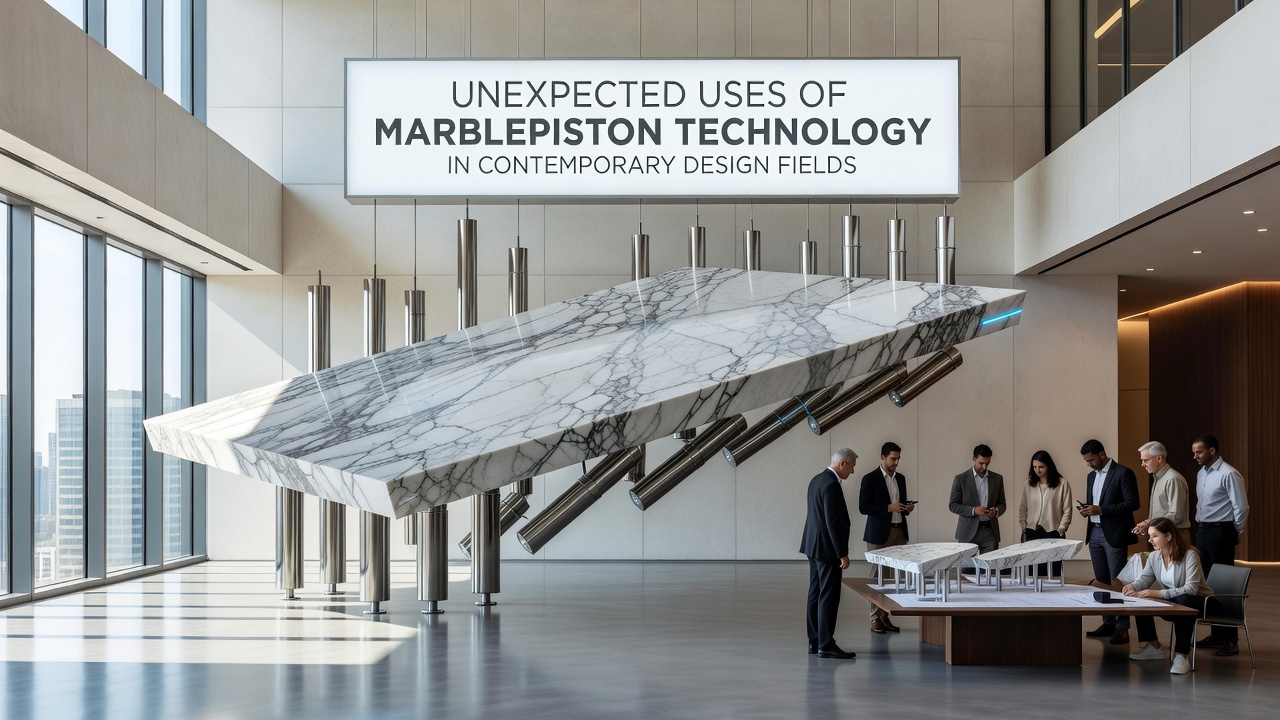
Architects now embed marblepiston units into movable partitions and shading systems that respond to environmental conditions without requiring bulky motors. One installation completed in 2025 featured pistons driving louvers across a public atrium, and the system adjusted positions based on sunlight angles while consuming minimal energy. Observers note that the marble surfaces resist wear from repeated cycles, which reduces maintenance demands compared to hydraulic alternatives. Studies conducted at European research facilities indicate these components handle lateral forces effectively when paired with reinforced frames, allowing larger-scale deployments in commercial buildings.
Product and Industrial Design Innovations
Product designers apply marblepiston assemblies to adjustable furniture and modular lighting fixtures where smooth, repeatable motion enhances user interaction. A line of office chairs released in early 2026 used embedded pistons for seat height and tilt adjustments that operate without audible clicks, and user trials recorded higher satisfaction scores in quiet office settings. The compact size permits integration into slim profiles that traditional actuators cannot achieve, and manufacturers report fewer part replacements over time because the marble composite resists corrosion in humid climates. Industry reports from Australian design councils highlight similar adaptations in retail display units that rotate products silently during customer presentations.

Integration in Fashion and Wearable Structures
Fashion technologists have begun exploring marblepiston elements in garments and accessories that require controlled expansion or articulation. Prototypes unveiled at design events in October 2026 demonstrated jackets with shoulder mechanisms that adjust fit automatically, and the pistons provided consistent tension across fabric layers without adding significant weight. Researchers at Canadian academic institutions measured reduced material fatigue in textiles paired with these systems, since the pistons distribute force evenly rather than creating localized stress points. The approach suits performance apparel where athletes need adaptive support during movement, and early field data suggests compatibility with washable components when seals prevent moisture ingress.
Transportation and Automotive Interiors
Automotive designers incorporate marblepiston technology into seat mechanisms and console adjustments that prioritize passenger comfort alongside reduced cabin noise. Vehicles tested in 2025 demonstrated piston-driven lumbar supports that maintain position under dynamic road conditions, and the low thermal expansion of marble composites prevents misalignment during temperature shifts. According to findings published by the National Institute of Standards and Technology, these units exhibit consistent performance metrics across extended duty cycles, which aligns with durability requirements for fleet applications. Engineers also note potential in cargo restraint systems where vibration damping improves load security during transit.
Emerging Patterns in Sustainable Design
Design teams pair marblepiston technology with recycled composites to meet circular economy targets in multiple sectors. Projects documented in 2026 showed how piston housings made from reclaimed stone waste lower overall material footprints while preserving mechanical reliability. The technology supports modular disassembly at end of life, and facilities report streamlined separation processes because the components avoid adhesives that complicate recycling streams. Data indicates energy savings during operation because the pistons require less force to initiate movement than comparable systems, which contributes to lower lifecycle energy calculations in certified green buildings.
Conclusion
Marblepiston technology continues to appear in unexpected design contexts as material properties align with demands for quiet, durable, and compact motion control. Applications span architecture, product development, fashion, and transportation, with ongoing work examining scalability and material sourcing improvements. Figures from ongoing research programs reveal steady adoption rates through 2026, driven by measurable performance advantages in real-world conditions.