Leon Reed · 25 September 2026
Tracing Thermal Regulation Patterns in Custom Spherical Drive Systems Across Varied Industrial Environments
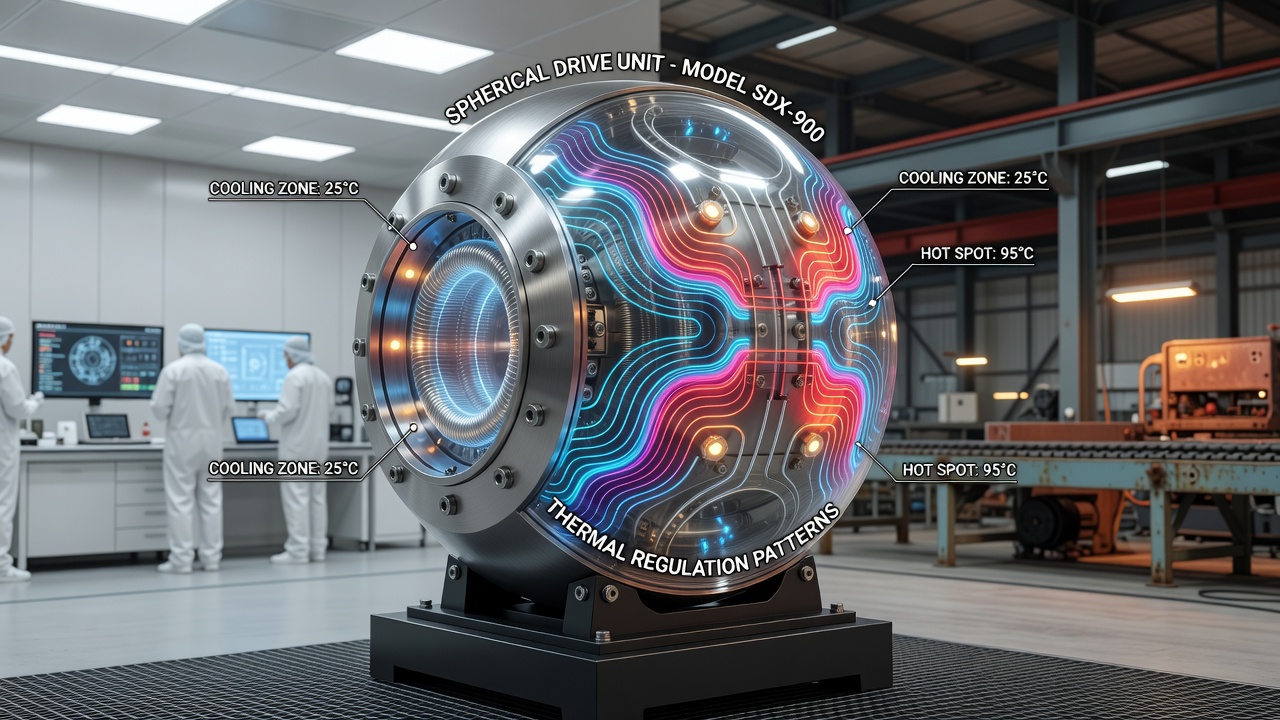
Custom spherical drive systems appear in manufacturing plants, automotive assembly lines, and aerospace testing facilities where precise motion control meets demanding thermal conditions. These systems rely on spherical elements to transmit torque and enable multi-axis movement, yet heat buildup from friction and load cycles can alter performance metrics across different sites. Data collected from sensor arrays shows consistent patterns in how temperature gradients form along the spherical interfaces when ambient conditions shift from controlled indoor settings to outdoor exposure in regions with extreme seasonal swings.
Core Components and Heat Dynamics
Spherical drive assemblies incorporate precision balls or rollers housed within custom-machined races, and these elements generate localized heat during continuous operation at speeds above 500 RPM. Engineers monitor surface temperatures using embedded thermocouples, and records indicate that peak readings often concentrate at the contact points between spheres and bearing surfaces. In facilities processing heavy metals, for instance, surrounding machinery contributes additional radiant heat that compounds the internal generation, leading to measurable rises of 15 to 25 degrees Celsius within the first hour of startup.
Researchers have tracked these patterns through long-term logging in varied climates, and findings reveal that humidity levels above 70 percent accelerate thermal transfer rates while dry environments slow dissipation. Studies conducted at multiple plants demonstrate that spherical systems equipped with integrated cooling channels maintain steadier operating ranges compared to sealed units without such features.
Environmental Variations and Observed Patterns
Industrial sites in northern climates report different regulation behaviors than those in equatorial zones, where daytime highs push ambient air past 35 degrees Celsius. Data from Canadian research stations documents slower heat buildup during winter months because lower external temperatures aid passive cooling, yet rapid warm-up phases occur when equipment transitions from idle to full load. In contrast, facilities in Australian mining operations note sustained elevated baselines because dust accumulation on external housings reduces convective airflow.
Automotive plants in the United States Midwest have logged similar trends during summer production surges, and figures from those sites show that spherical drives operating near welding stations experience localized spikes that propagate through the assembly within minutes. European automotive suppliers, meanwhile, integrate phase-change materials around drive housings, and test results indicate these additions flatten temperature curves by absorbing excess energy during peak cycles.
Monitoring Techniques and Data Collection
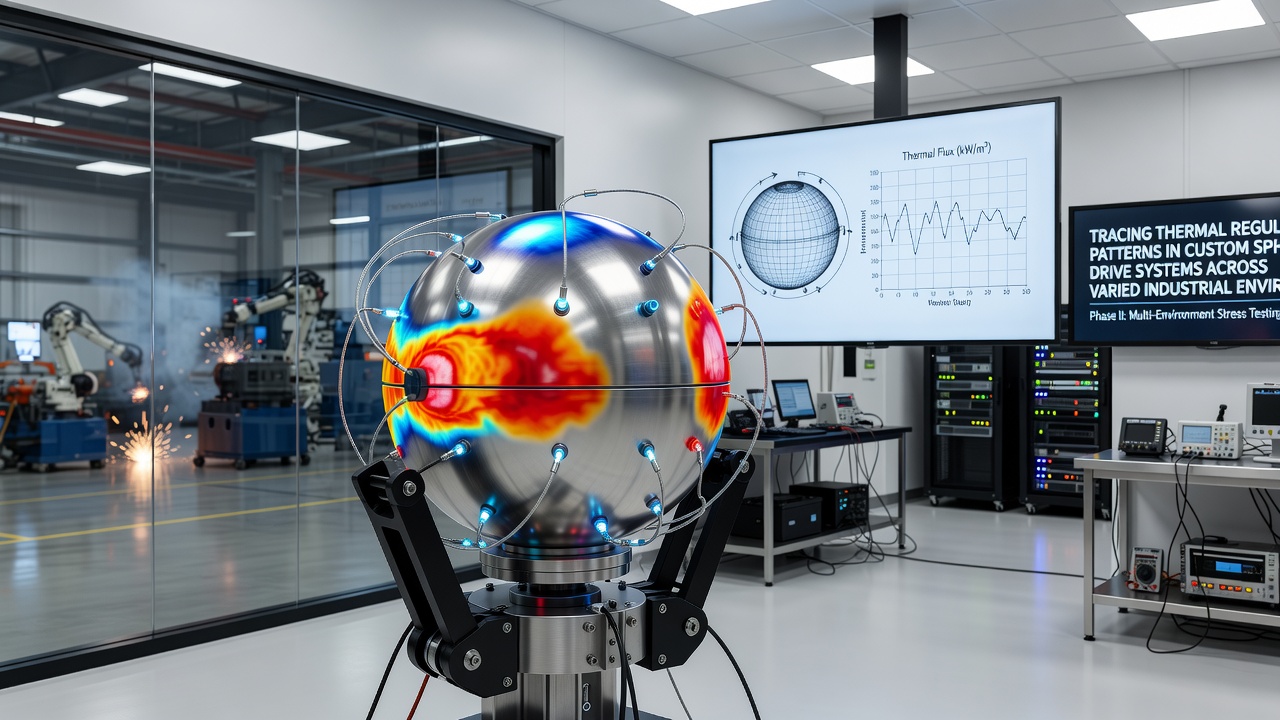
Operators deploy infrared cameras alongside contact sensors to map thermal fields in real time, and software platforms correlate these readings with load, speed, and vibration data. One installation at a German precision engineering firm captured continuous streams throughout 2025 and into September 2026, revealing that spherical drive units subjected to variable-speed protocols exhibited narrower temperature bands than those run at constant high output. The collected datasets allow predictive models to flag deviations before they reach critical thresholds.
According to guidelines published by the National Institute of Standards and Technology, calibration of thermal sensors must occur at regular intervals to ensure accuracy across wide operating ranges. Additional work from university laboratories in Japan has explored micro-channel cooling embedded directly into sphere housings, and preliminary reports note reductions in average operating temperature by up to 12 degrees Celsius under standardized test loads.
Adaptations Across Sectors
Food processing environments demand corrosion-resistant coatings on spherical components, and these coatings influence heat transfer coefficients in measurable ways. Plants in the United Kingdom have adjusted lubrication schedules based on temperature logs, extending intervals during cooler periods while shortening them when ambient conditions rise. Aerospace test rigs require systems that tolerate rapid pressure changes alongside thermal cycling, and records from those setups show that spherical drives with ceramic spheres maintain tighter regulation than all-metal equivalents.
Heavy equipment operators in South American extractive industries face abrasive particles that enter seals and increase internal friction, and temperature monitoring there confirms faster escalation once contamination begins. Adjustments such as upgraded filtration and periodic flushing have restored baseline patterns in documented cases.
Conclusion
Patterns traced across these environments illustrate how custom spherical drive systems respond to combined internal generation and external influences through consistent, measurable thermal behaviors. Continued logging and sensor refinement support ongoing refinements in design and operation, while cross-regional data sharing helps standardize approaches that address both efficiency and durability requirements in diverse settings.