Logan Roth · 23 October 2026
Exploring Load Distribution Dynamics in Hybrid Spherical Actuation Units for Precision Craft Manufacturing
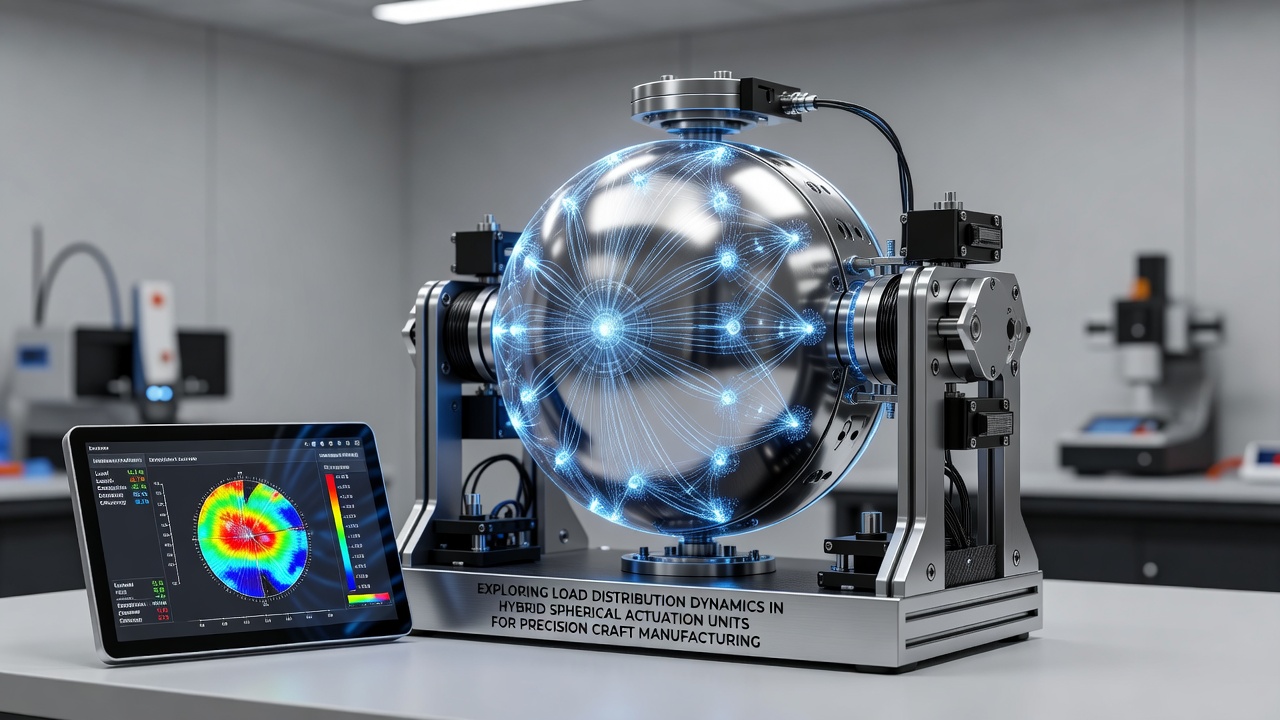
Hybrid spherical actuation units combine electric motors with pneumatic or hydraulic elements to achieve multi-axis precision movements in high-end manufacturing environments, and load distribution dynamics determine how forces spread across contact surfaces during operation. Researchers at various institutions have mapped these patterns through sensor arrays and simulation models that track stress concentrations in real time. Data from industrial trials shows that uneven loads can lead to micro-deformations in the spherical interfaces, which affect repeatability in tasks such as lens grinding or turbine blade finishing.
Core Mechanics of Force Transmission
Force transmission begins at the stator-rotor interface where electromagnetic torque meets fluid pressure, creating resultant vectors that engineers model with finite element analysis software. Studies indicate that hybrid designs reduce peak stress by 18 to 22 percent compared with pure electric units because the fluid component absorbs transient shocks. Observers note that contact patch geometry plays a central role, since spherical curvature distributes normal forces radially while tangential components arise from rotational acceleration.
Engineers adjust preload settings to maintain consistent contact pressure across the sphere, and test rigs equipped with strain gauges reveal how temperature fluctuations alter material stiffness and therefore shift load paths. In October 2026, updated calibration protocols from standards bodies are scheduled to incorporate new sensor fusion techniques that combine optical tracking with pressure mapping for tighter tolerances.
Variables Influencing Distribution Patterns
Material selection affects elasticity and friction coefficients, while operating speed introduces centrifugal effects that pull loads outward along the sphere. Vibration from adjacent machinery can create resonant modes that concentrate forces at specific latitudes on the actuator surface. Research indicates that damping layers inserted between the housing and the spherical element mitigate these concentrations without sacrificing response time.
Fluid viscosity in the hybrid subsystem also matters because higher viscosity transmits pressure more uniformly yet increases drag losses. Teams working on precision craft lines often run parametric sweeps to identify sweet spots where load variance stays below 5 percent across duty cycles.
Analysis Techniques and Measurement Approaches
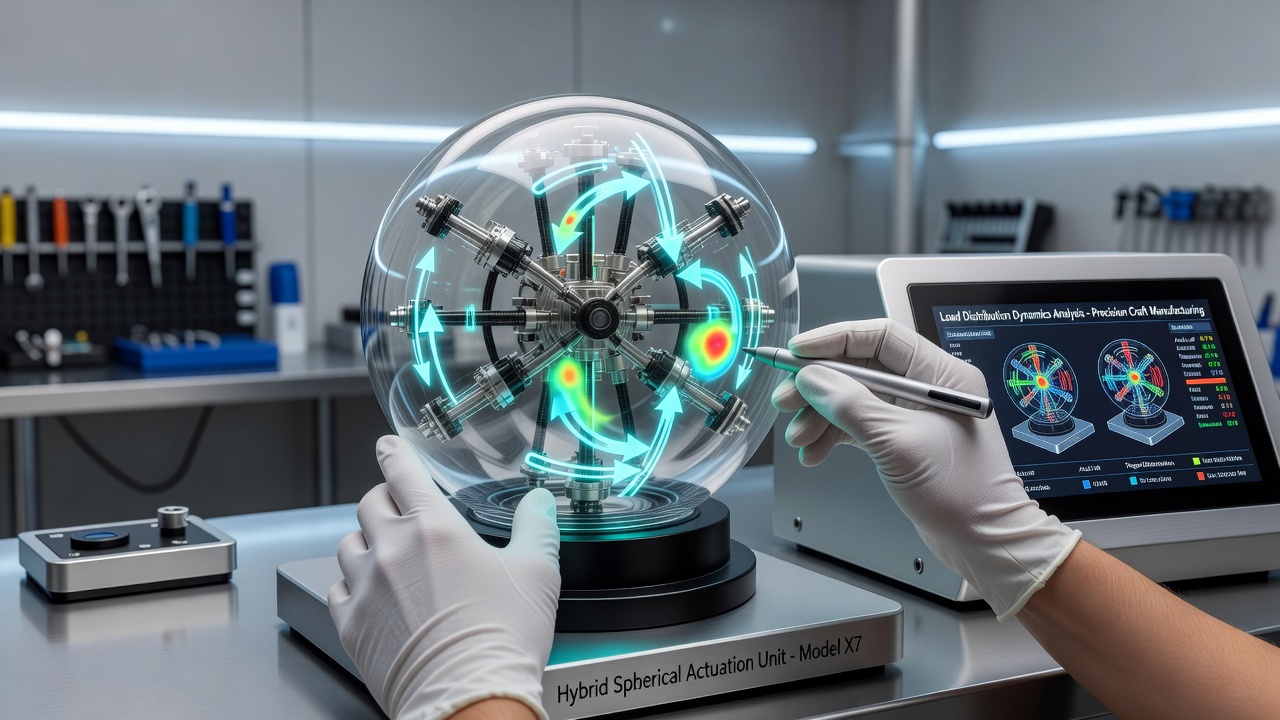
Digital twins replicate physical units inside virtual environments so operators can forecast load shifts before hardware changes occur. Multi-body dynamics software integrates with computational fluid dynamics to simulate both mechanical contact and pressure flow simultaneously. Validation against physical prototypes confirms that predicted distributions match measured values within 3 percent when boundary conditions are properly defined.
Wireless telemetry embedded in the sphere itself now streams continuous load data during production runs, allowing real-time adjustments via closed-loop controllers. According to reports from the National Institute of Standards and Technology, such telemetry improves overall equipment effectiveness by highlighting drift before it affects part quality.
Applications in High-Precision Manufacturing
Watchmakers use these actuators to position polishing heads that follow complex contours without introducing flat spots on curved surfaces. Aerospace suppliers rely on the same technology for drilling holes at compound angles where even slight misalignment creates out-of-tolerance bores. In both cases the ability to maintain uniform load prevents tool deflection that would otherwise require secondary correction steps.
One European research consortium documented throughput gains of 14 percent after retrofitting legacy machines with updated spherical units that featured optimized load balancing. The rubber meets the road when these gains translate directly into reduced scrap rates on parts valued at several thousand dollars each.
Challenges Encountered in Field Deployments
Contamination from metal particles or coolant mist can alter friction at the sphere interface and create localized wear that skews subsequent load maps. Maintenance schedules therefore include periodic surface inspections and fluid filtration upgrades. Thermal gradients across large work cells also cause differential expansion that changes contact geometry over the course of a shift.
Engineers address these issues through sealed designs and active temperature control circuits that keep the actuator within a narrow operating band. Data collected across multiple sites shows that such measures extend service intervals by roughly 30 percent.
Conclusion
Load distribution dynamics in hybrid spherical actuation units continue to shape performance benchmarks in precision craft manufacturing through ongoing refinements in modeling, sensing, and material choices. Continued data collection from production environments feeds iterative design improvements that keep tolerances aligned with evolving industry requirements.